Introduction
My work in the Forest and Fire Ecology Lab gave me a closer look at how forests are studied as living, layered systems. A forest is not just a collection of trees. It includes canopy structure, understory vegetation, soil, organic material, disturbance history, and the conditions that shape how carbon is stored and cycled through the landscape.
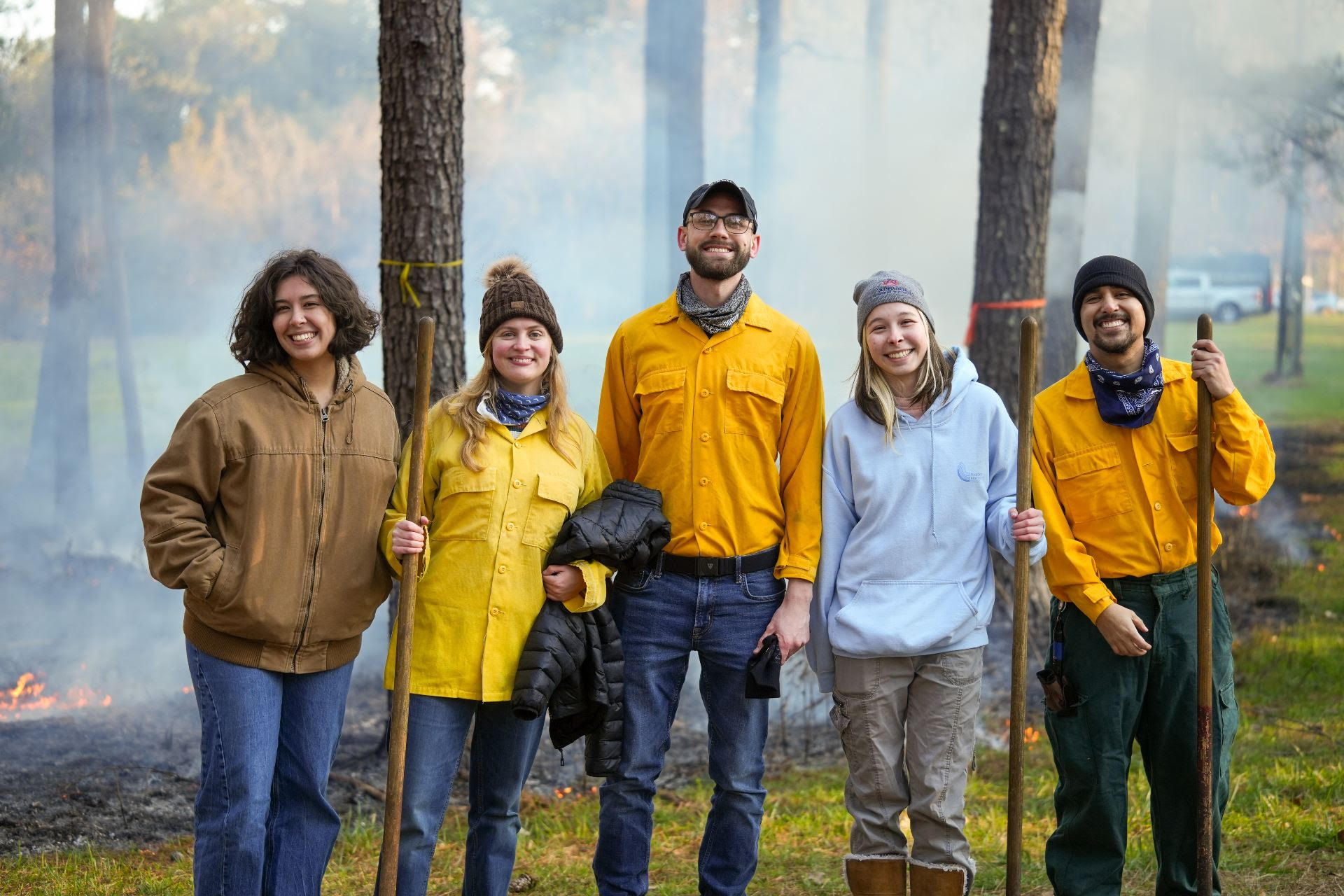
As an undergraduate research assistant, I supported field and lab work focused on forest traits, soil and vegetation carbon pools, sample processing, and data management. The experience helped me understand how ecological questions become measurable: through repeatable observations, careful sampling, and records that connect each data point back to the site where it was collected.
Reading Forest Structure
One of the main parts of my fieldwork involved collecting forest trait data, including understory, midstory, and overstory cover. These layers help describe the structure of a forest. The overstory shows the dominant tree canopy, the midstory captures smaller trees and woody growth, and the understory reflects the plants growing closer to the ground.
Recording these layers matters because forest structure affects light, moisture, habitat, fire behavior, and regeneration. Two sites can both be "forests," but they may function very differently depending on how dense the canopy is, how much vegetation is growing below it, and how open or shaded the forest floor is.
This work trained me to slow down and observe the forest systematically. The field notes and measurements turn visual conditions into information that can be compared across plots, sites, and time going forward.
Sampling Carbon Pools
I also helped collect carbon pool measurements in soils and understory vegetation. Carbon in a forest is stored in many places: living plants, roots, leaf litter, woody debris, soil organic matter, and other material on or below the forest floor. Measuring those pools helps researchers understand how forests store carbon and how that storage may change with disturbance, management, or environmental conditions.
The field portion of this work requires consistency and a good attitude. Samples have to be collected using the same methods and at similar times so the results are meaningful later. A soil or vegetation sample is more useful when it is tied to clear site notes, plot information, and handling records. Without that context, the sample loses part of its scientific value.
Working Across People and Places
Another important part of this experience was collaboration. I worked with graduate students and faculty researchers, and the work also involved coordination with private landowners and state and federal agencies. That gave me a better understanding of how applied ecological research often happens across different groups.
Forest and fire ecology is not only academic. It connects to land management, conservation, property boundaries, public agencies, and real decisions about how landscapes are studied and cared for. Being part of that process helped me see why communication and organization matter as much as technical skill.
What I Took From the Experience
My time in the Forest and Fire Ecology Lab strengthened the way I think about field research. I learned that forests can be measured in structured ways without losing sight of their complexity. Vegetation cover, soil samples, carbon pools, and field notes are all pieces of a larger picture.
The experience also helped me connect field ecology with data management. Each measurement matters more when it is recorded clearly, stored correctly, and connected back to the site conditions that produced it. For me, this work reinforced the importance of careful observation, repeatable methods, and practical environmental research.
Conclusion
Working in the Forest and Fire Ecology Lab gave me hands-on experience with the process of turning forest conditions into ecological evidence. Through field measurements, carbon pool sampling, lab processing, collaboration, and data management, I gained a stronger appreciation for how forests are studied from the ground up.
This work taught me that environmental research is built through careful, repeated steps. A single plot or sample may seem small, but when collected with consistency and context, it becomes part of a larger understanding of forest structure, carbon storage, disturbance, and ecosystem change.