Built for the Water
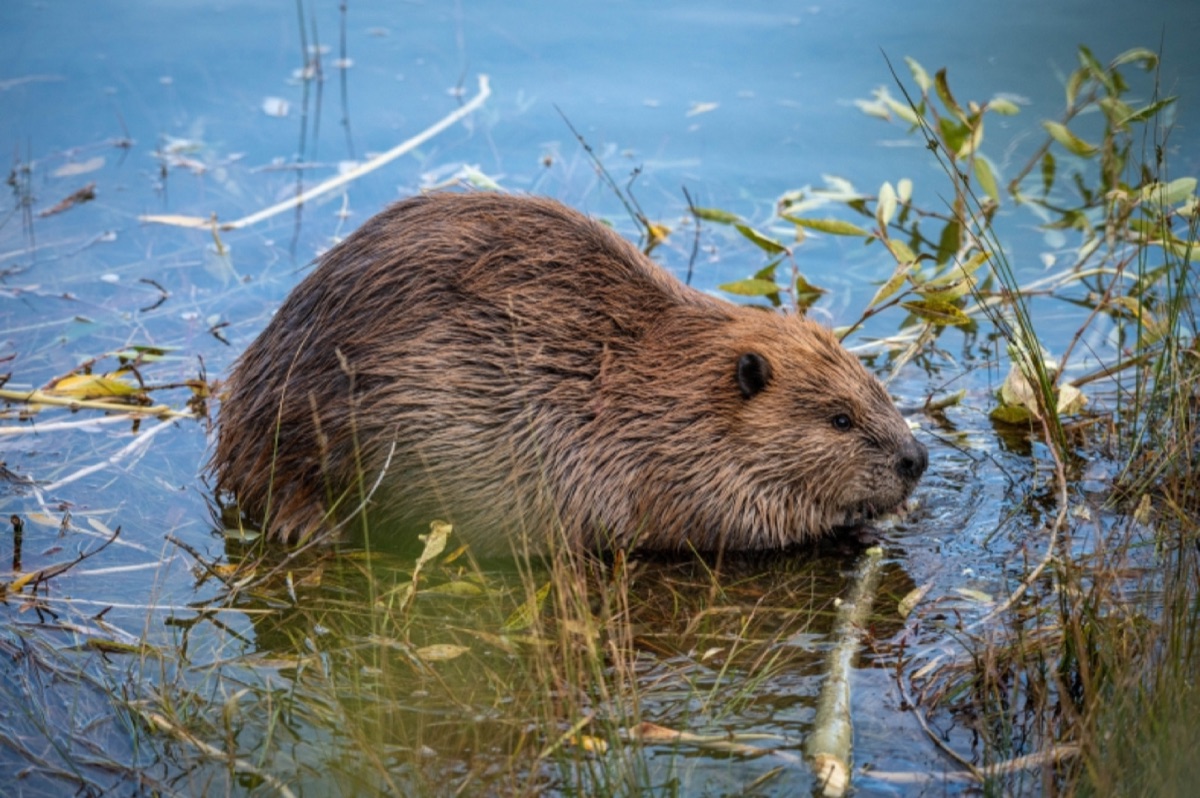
Beavers are large semi-aquatic rodents with webbed back feet, waterproof fur, and flat tails that help them swim, store fat, and warn others by slapping the water. Their orange front teeth grow continuously and are strengthened with iron-rich enamel, which helps them cut through trees and branches. They do not eat wood itself as their main food; they mostly feed on bark, cambium, leaves, twigs, aquatic plants, and roots.
An Ecological Eyesore
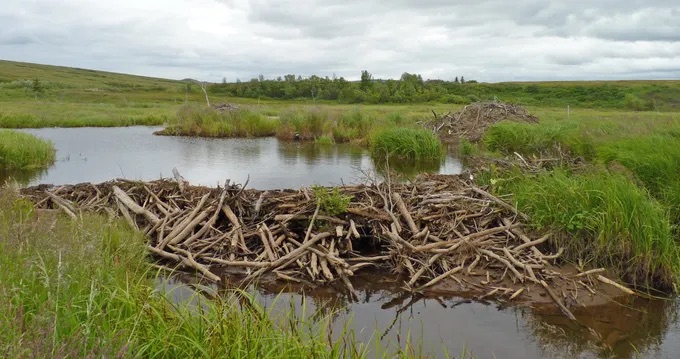
Beaver dams are built from branches, mud, stones, and plant material. The goal is not random construction; it is protection. By raising water levels, beavers create deeper ponds where they can build lodges with underwater entrances. These entrances make it harder for predators to reach them. In deeper lakes or rivers, beavers may skip dam-building because the water is already deep enough.
From a human perspective, beaver work can look messy. Flooded edges, standing dead trees, muddy channels, and tangled branches do not always match the clean, controlled version of nature people are used to seeing. But ecological value is not always tidy. Sometimes the mess is the function.
Wetland Welfare
Because their dams slow water, beavers often create ponds, marshes, and wet meadows. These areas can hold sediment, spread water and nutrients across the floodplain, and create habitat for frogs, fish, insects, birds, and mammals. Fast water can leave a system quickly, taking sediment and nutrients with it but when water is held on the land, it can spread, settle and support wetland plants, amphibians, insects, birds, and other wildlife. A single beaver pond can become a small center of biodiversity because it offers open water, muddy edges, dead wood, young vegetation, and sheltered aquatic habitat.
Learning from Beavers
Beavers make me think about how often environmental management tries to separate stability from disturbance. In reality, some disturbance creates structure. A dam, a flooded patch, or a shifted channel can interrupt one pattern while supporting another.
I think that is why beavers are such a good reminder that healthy landscapes are not always static. They hold movement, interruption, repair, and change. Paying attention to beavers means paying attention to process, and to the possibility that an ecosystem can be productive precisely because it refuses to stay neat.